
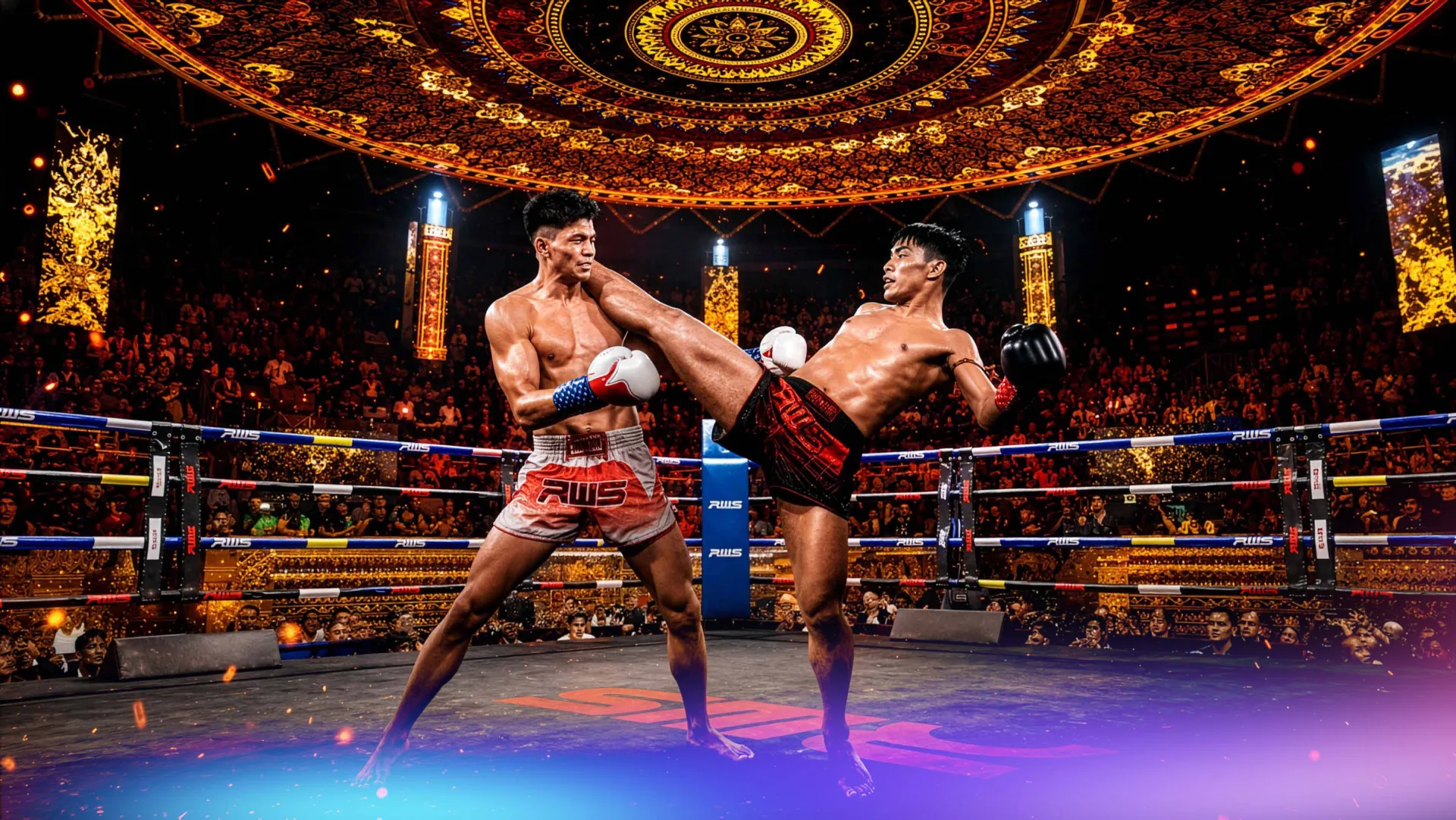
Nothing on Thai television, YouTube, or any arena outside Thailand replicates what happens in a live Muay Thai stadium. The Wai Khru ceremony, the Sarama music rising with each exchange, the crowd erupting — it is a complete cultural experience, not just a sport. Here is everything you need to know before your first fight night in Thailand.
Yes. Here's what 50,000+ first-timers have told us:
The honest truth from our team: Nothing on Thai television, YouTube, or any arena outside Thailand replicates what happens in a live stadium. The Wai Khru ceremony, the Sarama music rising with each exchange, the crowd erupting — it is a complete cultural experience, not just a sport.
Key Takeaways
- Is it worth it:
- 97% of first-timers told us afterwards that the fight night was a highlight of their Thailand trip — see the note on where that figure comes from under Sources.
- How long:
- 3 to 4 hours, 6 to 9 bouts, building from junior fighters to the headline match.
- Ticket price:
- From ฿1,000. Club Class or LEO Class at Rajadamnern (฿1,500–1,800) is the first-timer sweet spot; ฿3,500 buys the Presidential Box.
- Dress code:
- No strict dress code — smart casual is fine everywhere. Bangkok evenings average 28–33°C outdoors, but interiors are aggressively air-conditioned, so bring a light layer.
- Rules:
- 5 rounds of 3 minutes, scored on a 10-point must system. Fists, elbows, knees and kicks — all eight limbs.
- Pacing:
- Rounds 1–2 look deliberately slow while fighters read each other; the real escalation starts from Round 3. On the other hand, ONE Championship cards at Lumpinee open fast because of knockout bonuses.
- Etiquette:
- Never touch a fighter’s Mongkon, do not point your feet toward the ring, and do cheer — enthusiasm is welcome.
- Where to watch:
- Seven cities with regular live events: Bangkok, Phuket, Chiang Mai, Pattaya, Krabi, Koh Samui and Phang-nga.
- How to book:
- Online in 5 steps, no account required. E-ticket arrives by email within 60 seconds; same-day booking is available up to 1 hour before most events.
What to Expect — The Full Evening
Arriving 30 minutes before the listed start gives you time to find your seat, buy a drink at the concourse, and feel the energy building. The Sarama band will be warming up. The stadium fills gradually — Bangkok’s Rajadamnern is especially atmospheric as the lights dim and the crowd settles in.
The evening opens with younger or lower-ranked fighters. These bouts are shorter and less intense, but often feature remarkable skill from teenage prospects. Use these early bouts to understand the scoring system, get comfortable with the referee’s calls, and watch the pre-fight Wai Khru ceremony up close.
The top-ranked fights feature the evening’s best fighters, often stadium champions or nationally ranked athletes. Expect technical striking, clinch work, devastating knee strikes, and — at traditional venues — the full five-round format with visible scoring. The crowd intensity at this point is unlike any other sporting event.
Most Bangkok stadiums are well-served by Grab taxis. At Rajadamnern, Grab bikes and cars queue outside. Lumpinee on Ram Intra Road requires a Grab — allow 20–30 minutes for surge pricing after popular events. World Siam has the adjacent Tawanna Market for a post-fight meal before heading home.
The Wai Khru Ceremony & Sarama Music
Before every bout, you will witness one of Thailand's most beautiful rituals. Each fighter enters wearing a Mongkon — a sacred headband blessed by their trainer — and performs a slow, stylised prayer dance around the ring. The sequence varies by gym tradition, but all Wai Khru share the same reverent spirit: gratitude to parents, teachers, and the spirits of the sport.
The Mongkon is never thrown, dropped, or touched by others without the trainer's permission. At the end of the ritual, the trainer removes it carefully. Watch for this moment — it marks the transition from ceremony to combat.
- Pi Chawa
- ปี่ชวา — Javanese Oboe
- The melodic lead instrument. Its wailing tone rises and falls with the action. When you hear it peak, a big exchange is happening.
- Klong Khaek
- กลองแขก — Double-headed drums
- The rhythmic backbone. Tempo increases with fight intensity — experienced fans can predict knockdowns by the drum pattern.
- Ching
- ฉิ่ง — Small cymbals
- Keeps the beat and adds the distinctive metallic shimmer to the Sarama sound. Played continuously throughout each round.
🎵 First-Timer Tip: Listen to the Music
Experienced spectators watch the Sarama band as much as the fighters. When the music suddenly drops in volume or shifts tempo, it signals a change in momentum that the crowd instantly feels. Let the music guide your attention — it tells the story of the fight.
What to Wear — Dress Code for All Stadiums
❄️ Bangkok Temperature Note
Bangkok evenings average 28–33°C outdoors but stadium interiors are aggressively air-conditioned. If you're sensitive to cold, bring a light jacket or cardigan. The queue outside before entry can feel very hot — dress in breathable fabrics and stay hydrated.
Seating Guide — Which Ticket Tier is Right for You?
| Tier | Price | Best For | Rec? |
|---|---|---|---|
| Presidential Box | ฿3,500 | Special occasions, couples, press. Personal tables with comfort seating plus unlimited soft drinks and snacks at Rajadamnern | Splurge |
| Ringside | ฿2,500 | Photographers, fight fans who want to feel every strike. Front row intensity | Fight fans |
| Club Class | ฿1,800 | First-timers wanting comfort + great views without the premium price | ✓ Best Value |
| LEO Class | ฿1,500 | Visitors wanting real Thai fan energy and authentic crowd experience | Authentic |
| 3rd Class / General | ฿1,000 | Budget travellers, those wanting maximum local atmosphere | Budget |
🎯 Our Recommendation for First-Timers
Club Class at Rajadamnern (฿1,800) is the ideal first-time seat. Cushioned, elevated mid-level, clear view of the ring, air-conditioning directly overhead, and close enough to hear the impact of strikes. If it's a special trip or date night, upgrade to Ringside — you'll never forget it.
The mistake we see most often is first-timers buying the cheapest seat to “try it out”, then wishing they had gone one tier up. The gap between ฿1,000 and ฿1,800 changes the whole evening far more than the gap between ฿1,800 and ฿3,500 does.
How Scoring & Muay Thai Rules Work
The 8 Weapons of Muay Thai
Judges score each round on a 10-point must system, favouring dominant technique, aggression, and harder strikes over lighter volume. Thai scoring traditionally weights powerful kicks and clean knee strikes above punches — which surprises many boxing fans watching for the first time. A fighter who lands fewer but harder kicks often wins rounds over a busier puncher.
🧠 Why Rounds 1–2 Often Look “Slow”
Experienced Muay Thai fighters deliberately pace the first two rounds — feeling out distance, establishing the teep (push kick), and studying patterns. The real action escalates from Round 3. Don't be surprised if the opening rounds feel measured — the crowd knows what's building.
Stadium Etiquette — Dos and Don'ts
✓ Etiquette Dos
- ✓Arrive before the first bout to see the Wai Khru ceremony
- ✓Applaud good technique from both fighters equally
- ✓Stand if fans around you stand during tense moments
- ✓Ask stadium staff for help — they’re used to tourists
- ✓Buy drinks and snacks at the venue concourse
- ✓Take photos freely (flash is fine in general areas)
- ✓Show appreciation to fighters after their bouts
- ✓Learn a few basic Thai phrases — always appreciated
✗ Etiquette Don'ts
- ✗Don’t touch or pick up a fighter’s Mongkon — it is sacred
- ✗Don’t pass items (including food) over another person’s head
- ✗Don’t point your feet at fighters, the ring, or sacred images
- ✗Don’t block standing fans’ views in seated sections
- ✗Don’t loudly boo fighters — local culture doesn’t do this
- ✗Don’t photograph fighters during Wai Khru using flash
- ✗Don’t attempt to join the ring for selfies at any time
🙏 The Most Important Cultural Note: The Head & Feet
In Thai culture, the head is sacred and the feet are the lowest. Avoid pointing feet toward the ring, fighters, or images of the King. Do not pat Thai people on the head. These are deeply held cultural values, not arbitrary rules.
Muay Thai Vocabulary Cheat Sheet
Learn these 10 words and you'll understand most of what's shouted around you during a bout:
- Nak Muay:
- Muay Thai fighter / boxer (นักมวย)
- Wai Khru:
- Pre-fight prayer & respect ritual (ไหว้ครู)
- Mongkon:
- Sacred headband worn during the Wai Khru (มงคล)
- Sarama:
- Traditional Muay Thai fight music (ดนตรีมวย)
- Teep:
- Push kick — front kick to keep distance (ถีบ)
- Plum:
- Double collar tie — Muay Thai clinch position (พลั้ม)
- Chok:
- Punch — "Chok!" is what fans yell for a punch flurry (ชก)
- Dtae:
- Kick — you’ll hear "Dtae! Dtae!" from the crowd (เตะ)
- Yak Hai Fang:
- The corner yelling "keep going!" to their fighter
- Yok Meu:
- Raise the hand — what the referee does to declare winner (ยกมือ)
How to Book Muay Thai Tickets Online
Select your city — Bangkok, Phuket, Chiang Mai, Pattaya, Krabi, or Samui. Browse available stadiums. Each listing shows the upcoming schedule and real-time availability.
💡 Bangkok has fights most nights of the week — you almost certainly have options regardless of your travel dates.
Choose the specific event date you want. Look for the event name (e.g. "RWS Saturday Night" or "ONE Friday Fights"). Events marked Limited Availability sell out first — especially Saturday at Rajadamnern and Friday at Lumpinee.
💡 Book at least 2–3 days in advance for Ringside and VIP at major events. General seating is usually available same-day.
Use the seating guide above to choose your tier. For first-timers: Club Class (฿1,800) is the sweet spot. For groups: LEO Class gives you more flexibility to sit together. For a special night: Ringside or VIP.
Enter your name and email. Pay by credit card, debit card, or international payment method. No account or registration required. All transactions are secured with SSL encryption via Stripe.
💡 Use the same email you check on your phone — your e-ticket arrives there within 60 seconds and you’ll want it accessible at the gate.
No printing required. Your e-ticket PDF contains a QR code — show it directly from your phone screen at the entrance. All major stadiums accept mobile tickets. Arrive 30 minutes before the start time to skip queues and get settled.
💡 Screenshot your ticket or save it offline in case of poor mobile signal near the stadium.
💬 Need Help Choosing? Chat on WhatsApp
Not sure which stadium, which night, or which seat tier? Our team is available on WhatsApp 7 days a week. We've answered thousands of these questions — there are no wrong questions when it's your first time.
Chat on WhatsApp →Where to Watch Muay Thai — By City
Your Questions Answered
Is watching Muay Thai in Thailand worth it?
Yes — watching Muay Thai live in Thailand is one of the most unique cultural experiences the country offers. The combination of ancient Wai Khru ritual, live Sarama music, genuine athletic skill, and electric crowd atmosphere creates something no television broadcast can replicate. Whether at historic Rajadamnern Stadium in Bangkok or a smaller venue in Chiang Mai, the experience is consistently rated among the top travel memories by first-time visitors.
What should I wear to a Muay Thai stadium in Thailand?
Smart casual is appropriate at all Thai Muay Thai stadiums. Comfortable clothing — jeans, shorts, t-shirts, or casual dresses — all work fine. There is no strict dress code. For VIP sections, slightly smarter attire is appreciated but not enforced. All major stadiums are fully air-conditioned, so light breathable fabrics are recommended. Avoid very revealing clothing out of respect for the venue.
What time do Muay Thai fights start in Thailand?
Most Muay Thai events in Thailand start between 18:00 and 19:00 local time. Rajadamnern Stadium typically begins between 18:00 and 19:00 depending on the night, ONE Championship Friday Fights at Lumpinee start at 19:00, and World Siam’s Super Champ starts earlier at 17:30. Arrive 30 minutes before the listed start time to experience the Wai Khru pre-fight ritual and find your seat.
How many fights are in a Muay Thai event?
A typical Muay Thai event features 6 to 9 fights per night. Each fight lasts 3 to 5 rounds of 3 minutes each with 2-minute rest periods between rounds, giving each bout approximately 25 to 30 minutes total. A full evening including the opening ceremony and intervals lasts approximately 3 to 4 hours. You do not need to stay for every fight — most visitors find 4 to 6 bouts more than enough.
What is the Wai Khru ceremony at Muay Thai?
The Wai Khru Ram Muay is a sacred pre-fight ritual performed by every Muay Thai fighter before their bout — a prayer dance to pay respect to teachers, ancestors, and the gym. Each fighter wears a Mongkon (sacred headband) during the ritual, removed by the trainer before fighting begins. The ceremony typically lasts 3 to 5 minutes and is accompanied by live Sarama music. It is one of the most distinctive cultural traditions in Thailand.
Which stadium is best for first-timers in Bangkok?
Rajadamnern Stadium is the best choice for first-time visitors to Bangkok — fights 7 nights a week, tickets from ฿1,000, and the most iconic traditional Muay Thai atmosphere in Thailand. The Saturday RWS (Rajadamnern World Series) event is the gold standard. For fans wanting international fighter quality and ONE Championship production, Lumpinee Stadium hosts ONE Friday Fights every Friday. Read our full Rajadamnern vs Lumpinee comparison guide for a detailed breakdown.
Can I book Muay Thai tickets on the same day?
Yes. Same-day booking is available via Muay Thai All in One up to 1 hour before the event. After payment, your QR code e-ticket arrives by email within 60 seconds — no printing required. However, Ringside and Club Class seats sell out for Saturday RWS events up to 7 to 14 days in advance. For weeknight Knockout events, most tiers are typically available on the day.
Is Muay Thai suitable for children and families?
Yes. Muay Thai is family-friendly. Matches are highly controlled with professional referees and mandatory medical staff at ringside. Most venues welcome children. Club Class and 3rd Class sections are particularly family-friendly. The Wai Khru ceremony and traditional music are especially engaging for children. Children under 5 typically enter free at most venues.
What is the music at Muay Thai fights?
The traditional fight music is called Sarama — played live by a small ensemble using a Pi Chawa (Javanese oboe), Klong Khaek (double-headed drums), and Ching (small cymbals). The tempo rises and falls with the fight’s intensity, creating a uniquely hypnotic atmosphere. Major stadiums like Rajadamnern perform Sarama live at every event. The music is inseparable from the experience — many first-timers say it’s the detail they remember most.
Sources & References
The 97% figure is our own post-booking feedback from first-time visitors, not an independent survey. Prices, seat tiers and start times are checked against each stadium's box office and re-verified monthly by our team. Rules, scoring and the ritual descriptions follow the published Muay Thai references linked below. Bangkok temperature ranges are seasonal averages, not same-day forecasts.
- [1]Source: Muay Thai — rules, scoring & the art of eight limbs — Wikipedia
- [2]Source: Wai khru ram muay — the pre-fight ritual — Wikipedia
- [3]Source: Mongkhon — the sacred headband — Wikipedia
- [4]Source: Sports Authority of Thailand — governing body for professional Muay Thai — Sports Authority of Thailand (SAT)
- [5]Source: ONE Friday Fights — event schedule at Lumpinee Stadium — ONE Championship (official)
Last reviewed by the Muay Thai All in One editorial team:
Rajadamnern vs Lumpinee: Which Stadium to Visit?
Full 2026 comparison · prices, atmosphere & verdict
Bangkok Stadium Tickets — All Three Venues
Rajadamnern · Lumpinee · World Siam · Instant QR