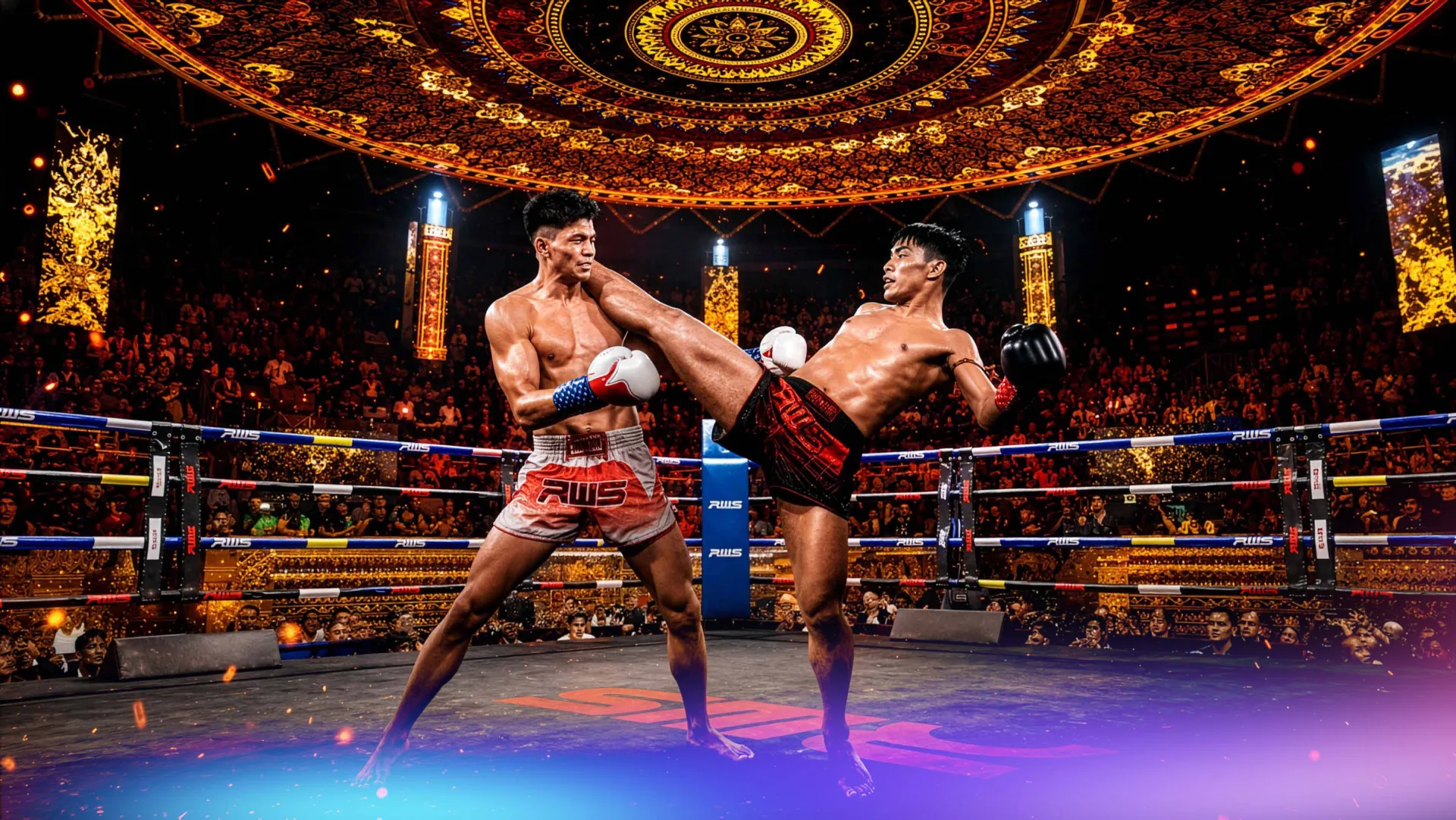
You do not need any fighting experience, any level of fitness, or any equipment of your own to walk into a Muay Thai class in Thailand. Beginner sessions are built for people who have never thrown a punch, and most gyms on our platform run mixed classes where a first-timer trains beside someone in their tenth year. This guide covers what a first class actually involves, what to bring, what it costs, and how to book one.
The short version
A beginner class runs 1.5 to 2 hours — warm-up, technique, pad work, cool-down. Gloves and wraps are provided at most gyms. Bring shorts, a t-shirt, a water bottle and a towel. Prices start from ฿400 a session. No experience required, and every gym on our platform accepts complete beginners.
Key Takeaways
- Experience needed:
- None. Every gym on our platform takes complete beginners, and most run mixed-level classes.
- Class length:
- Typically 1.5–2 hours: warm-up, technique drills, pad work with a trainer, cool-down.
- Price:
- From ฿400 per session in Phuket and ฿480 in Bangkok, up to ฿988 for premium Chiang Mai sessions.
- What to bring:
- Shorts, t-shirt, water bottle, towel. Gloves and hand wraps are provided at most gyms — confirm with your gym at booking.
- Where:
- 7 partner gyms across Bangkok, Chiang Mai, Phuket and Krabi.
- Group or private:
- Both. Group classes suit first-timers; private sessions give you a trainer's full attention for the whole hour.
- Kids & families:
- Krudam Gym Rama 2 and Krudam Gym Chiang Mai run classes for adults and kids.
- Language:
- Most trainers use functional English — and you don't need an English-speaking trainer to train effectively. Coaches rely heavily on visual demonstrations and universal Muay Thai terms.
What Actually Happens in a First Class
- Warm-up (10–15 min):
- A light jog or skipping rope to get the heart rate up, followed by dynamic stretching.
- Shadow boxing (5–10 min):
- You'll mirror the trainer's movements to get a feel for stance, guard, and footwork before any equipment is involved.
- Basic technique (20–30 min):
- This is where the fundamentals are broken down piece by piece — jab, teep (push kick), and roundhouse kick are the three moves almost every gym starts with.
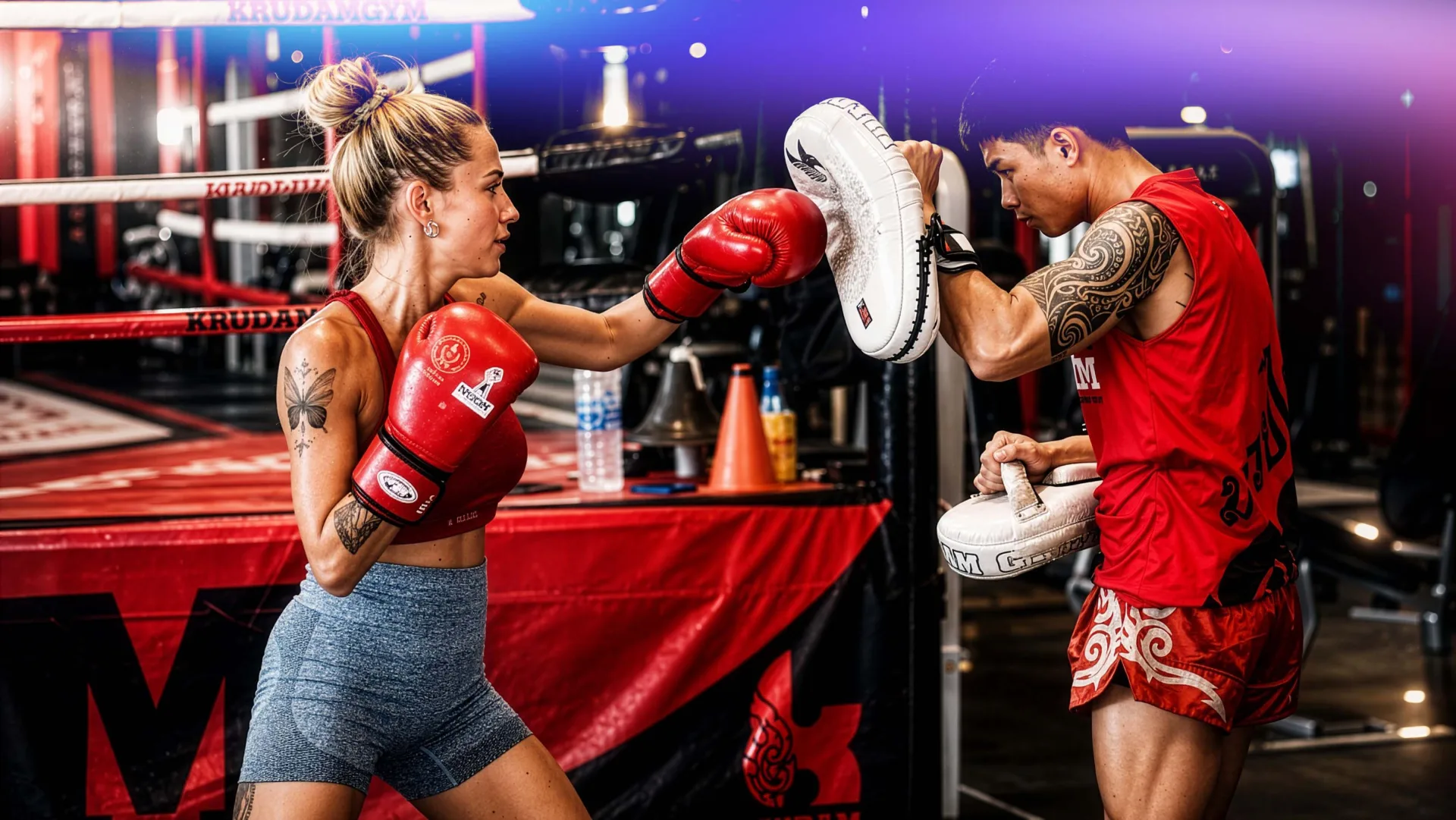
- Pad work with a trainer (20–30 min):
- One-on-one time holding Thai pads, where the trainer calls combinations and you throw them. This is the part most people describe as the highlight of the class.
- Light clinch work (optional, 5–10 min):
- A gentle introduction to the clinch — controlled, cooperative, and nothing like the clinch you'd see in a fight.
- Cool-down (5–10 min):
- Stretching to finish, sometimes with a short breathing or mobility routine.
There's no contact sparring anywhere in this sequence. If a gym does offer it, it's reserved for students who've trained for weeks or months and ask for it specifically.
What to Bring (and What You Don't Need To)
✓ Bring with you
- ✓Shorts (Muay Thai shorts if you have them, but any athletic shorts work for a first class)
- ✓A t-shirt or rash guard
- ✓A water bottle
- ✓A towel
✗ You don't need to bring
- ✗Gloves — provided at most gyms
- ✗Hand wraps — provided at most gyms
Because equipment policies can vary slightly gym to gym, it's worth confirming gloves and wraps are included when you book, especially if you have a preference for your own gear or specific hand sizing.
The 7 Gyms on Our Platform
| Gym | City | Starting price |
|---|---|---|
| Krudam Gym Sukhumvit 36 → | Bangkok | ฿598 |
| Watchara Muaythai School & Gym → | Bangkok | ฿480 |
| Krudam Gym Rama 2 → | Bangkok | ฿588 |
| Krudam Gym Chiang Mai → | Chiang Mai | ฿599 |
| Chiang Mai Muay Thai Gym → | Chiang Mai | ฿988 |
| RC Rachai Muaythai Class in Patong → | Phuket | ฿400 |
| Thewaritnoi Krabi Muaythai Class → | Krabi | ฿500 |
Krudam Gym is the largest name on this list, with three locations under the same lineage — Sukhumvit 36, Rama 2, and Chiang Mai — founded by Kru Dam (Dam Srichan), a former Thailand national-team fighter who took gold at the 24th SEA Games in and gold in kickboxing (81 kg) at the 1st Asian Martial Arts Games in , among other titles. All three welcome complete beginners and run both group and private classes; Rama 2 and Chiang Mai also offer kids' classes, making them a solid pick for families. If you're after a lower-cost entry point, RC Rachai Muaythai Class in Patong is the most affordable session on the list, while Chiang Mai Muay Thai Gym sits at the premium end for those who want a more personalized, higher-touch training experience.
Group Class or Private Training?
| Group class | Private training | |
|---|---|---|
| Price | Lower | Higher |
| Intensity | Moderate — paced for the group | Higher — tailored to you |
| Best for | First-timers, travelers wanting a fun, social session | Those wanting fast correction, a specific focus, or a more intense workout |
| Learning speed | Steady, shared pacing | Faster — full trainer attention for the whole session |
If this is a one-off “let's try it while we're in Thailand” experience, a group class is the easier, cheaper way in. If you're training over several days and want to build real technique quickly, a private session (or a mix of both) will get you there faster.
The pattern we see from repeat guests: book one group class first to see if you enjoy it, then a private session two or three days later once you know what you want to work on. That order gets people further than booking privates from day one.
The 8 Weapons: What You'll Learn First
- Jab:
- the foundation punch, used to gauge distance and set up everything else
- Teep (push kick):
- a straight kick used to create space and control distance
- Roundhouse kick:
- the signature Muay Thai kick, thrown with the shin rather than the foot
Elbows and knees, along with more advanced combinations, tend to come in once you've got the basics of stance, guard, and these three strikes down. For a deeper breakdown of the full eight weapons and how they build on each other, see our First-Timer Guide.
Gym Etiquette for Foreigners
- Wai Kru before stepping into the ring:
- A small bow of respect performed before entering (and often before leaving) the ring or training area.
- Take your shoes off:
- Before stepping onto the training mat or into the ring area.
- Don’t step over training equipment:
- Gloves, pads, and other gear left on the floor. Walk around instead.
- Head is considered high status, feet are considered low status:
- In Thai culture — avoid pointing your feet at people or at images of the Buddha, and avoid touching anyone’s head.
These customs are rooted in the same respect for the sport and its lineage that you'll see referenced throughout our First-Timer Guide.
How to Book a Class
Pick the one that matches your city, budget, and whether you want group or private training.
Available slots (morning or evening) are shown at checkout and vary by gym.
Bookings are processed through trusted payment providers with no hidden fees.
Typically within minutes of booking.
On the day of your class — no printing required.
We'd recommend booking a day or two ahead where possible, especially for private sessions or during peak travel periods, so your preferred time slot is available.
Your Questions Answered
Do I need any experience to try Muay Thai in Thailand?
No. Every gym on our platform accepts complete beginners, and most classes are mixed-level, so you'll train alongside people at every stage of experience.
What should I wear to my first Muay Thai class?
Athletic shorts and a t-shirt are enough. Gloves and hand wraps are provided at most gyms, so you don't need to buy anything in advance.
How much does a Muay Thai class cost in Thailand?
Prices on our platform start from ฿400 in Phuket and ฿480 in Bangkok, rising to ฿988 for premium sessions in Chiang Mai.
How long is a beginner Muay Thai class?
Most beginner classes run 1.5 to 2 hours, covering warm-up, technique, pad work, and cool-down.
Will I have to fight or spar in my first class?
No. First classes focus on technique and pad work with a trainer. Sparring is not part of a beginner session.
Do the trainers speak English?
Yes. Most Muay Thai trainers use functional English, but don't worry—you don't need an English-speaking trainer to train effectively. Coaches rely heavily on visual demonstrations and universal Muay Thai terms.
Can children join Muay Thai training?
Yes — Krudam Gym Rama 2 and Krudam Gym Chiang Mai both run classes for kids as well as adults.
How far in advance do I need to book a class?
We recommend booking at least a day or two ahead, particularly for private sessions, to secure your preferred time slot. Available morning and evening times are shown at checkout and vary by gym.
Sources & References
Gym names, cities and starting prices on this page are the rates our partner gyms sell through our platform, re-verified by our team each month. Class structure, timings and equipment policy come from our partner gyms directly — because policies vary slightly, confirm gloves and wraps at booking. Cultural and technique descriptions follow the published Muay Thai references linked below.
- [1]Source: Muay Thai — rules, scoring & the art of eight limbs — Wikipedia
- [2]Source: Wai khru ram muay — the pre-fight ritual — Wikipedia
- [3]Source: Mongkhon — the sacred headband — Wikipedia
- [4]Source: Sports Authority of Thailand — governing body for professional Muay Thai — Sports Authority of Thailand (SAT)
Last reviewed by the Muay Thai All in One editorial team: